
Real Lesson Series: Adding 7 MPH of Speed by Unlocking the Turn
Golfers don’t just take lessons to lower their scores. Sometimes they want to learn how to shape the ball better, sometimes they want to straighten out their slice, sometimes they want to hit the ball higher, or farther. In general, these are things that can help someone lower their scores, but they aren’t always the best way to make an impact. There’s nothing wrong with that. There is no need to think that every golfer’s happiness is directly related to the scores they shoot. Some rounds of 92 feel way better than other rounds of 92. Getting enjoyment out of the game comes from different things for everyone. Some people, especially beginners would have way more fun if they could hit the ball high and far whether that lowered their scores or not.
With this recent lesson we had, this golfer just wanted to: hit the ball further
With a lesson it’s important to take everything step-by-step and measure as much as you can. With this golfer we measured his swing speed and his club path (he also had a slice). We measured speed because it has a very high correlation to how far you hit the ball (if we just measured the total distance, the quality of the strike would have an outsized impact on how far the ball went). If your swing speed increases we can almost guarantee that over-time, as you hit the ball more and more solid, you will hit the ball farther (it’s your “potential”). We also measured club path because this person had a slice and we wanted to see if we could make some improvements to that ball flight as well.
Data:
7 iron club speed: 77mph
Club path: 5 degrees “out-to-in” (slice producing)
Even though it wasn’t difficult to see where the loss of power was coming from, it was still important to get initial measurements to track improvements (and potentially identify additional in-efficiencies or identify other pattern changes as the lesson progresses, or for future lessons)
The Numbers Don't Lie: His loss of power was coming from his limited hip and shoulder rotation
Check out the image on the left (his original swing) compared to the image on the right (Rory McIlroy).
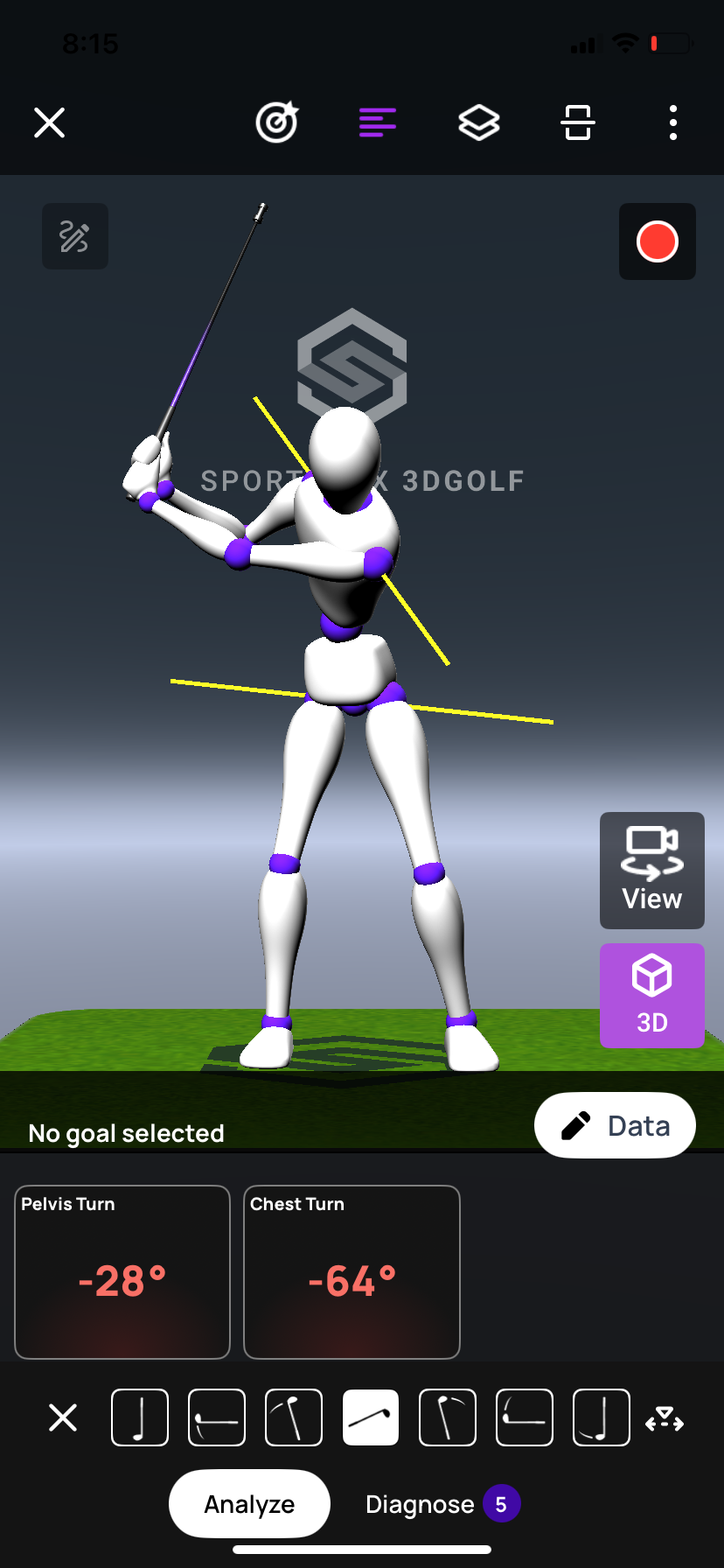
Student Chest Turn: -64° (Not enough)
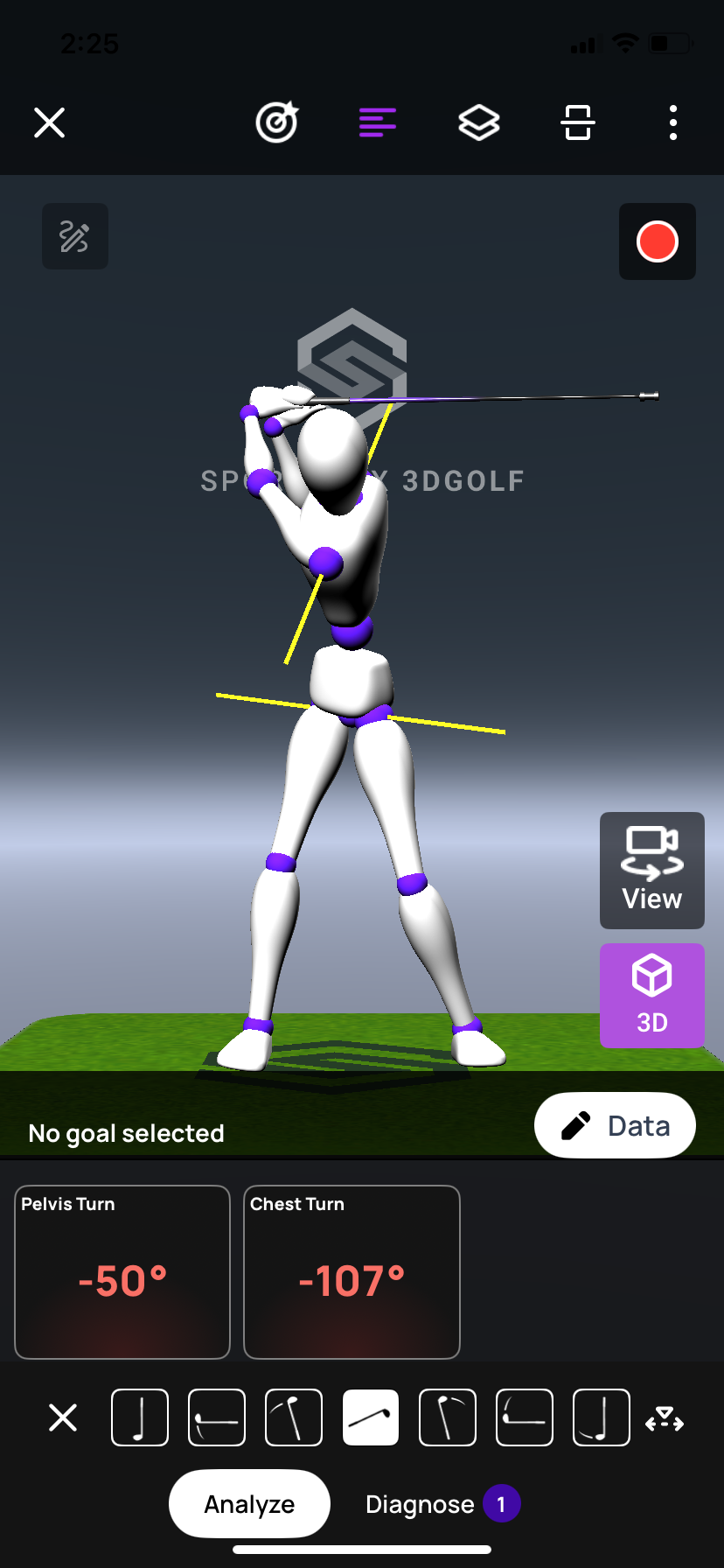
Rory McIlroy Chest Turn: -107° (Extreme)
Let’s clarify one thing: Rory McIlroy is on the extreme end of things when it comes to rotation, but nevertheless, this student was only rotating 64* in their backswing and the average PGA Tour player rotates 94*. This is a significant difference and has a high correlation to swing speed. One easy way to increase speed is to increase the amount of time you have to apply that speed. A golf swing happens very fast and the shorter that backswing is, the less time you have to accelerate the club head.
A swing with that little rotation also makes it so much harder to time your low point and your face angle. Which means to say, making a consistent and solid strike and hitting the ball to your target is very difficult
The Fix: Why He Couldn't Turn
We can’t expect every golfer to rotate the same way a PGA Tour player does, they have dedicated thousands of hours working on their mobility, fitness, and flexibility specifically for their golf swing. Everyone is going to have unique physical limitations that need to be addressed through stretching or resistance training, and their technique needs to be adjusted to fit these limitations.
-One way to test your own ability to rotate your chest is to sit in a chair with your club behind your head resting on top of your shoulders, from this position try to rotate left and right as far as you can without your lower body moving in the chair - the goal is about 45*
-Another way to test is to stand up in your golf posture, place your hands across your chest to the opposite shoulder, now rotate your shoulders in your backswing and into your follow through without letting your hips move.
The Result:
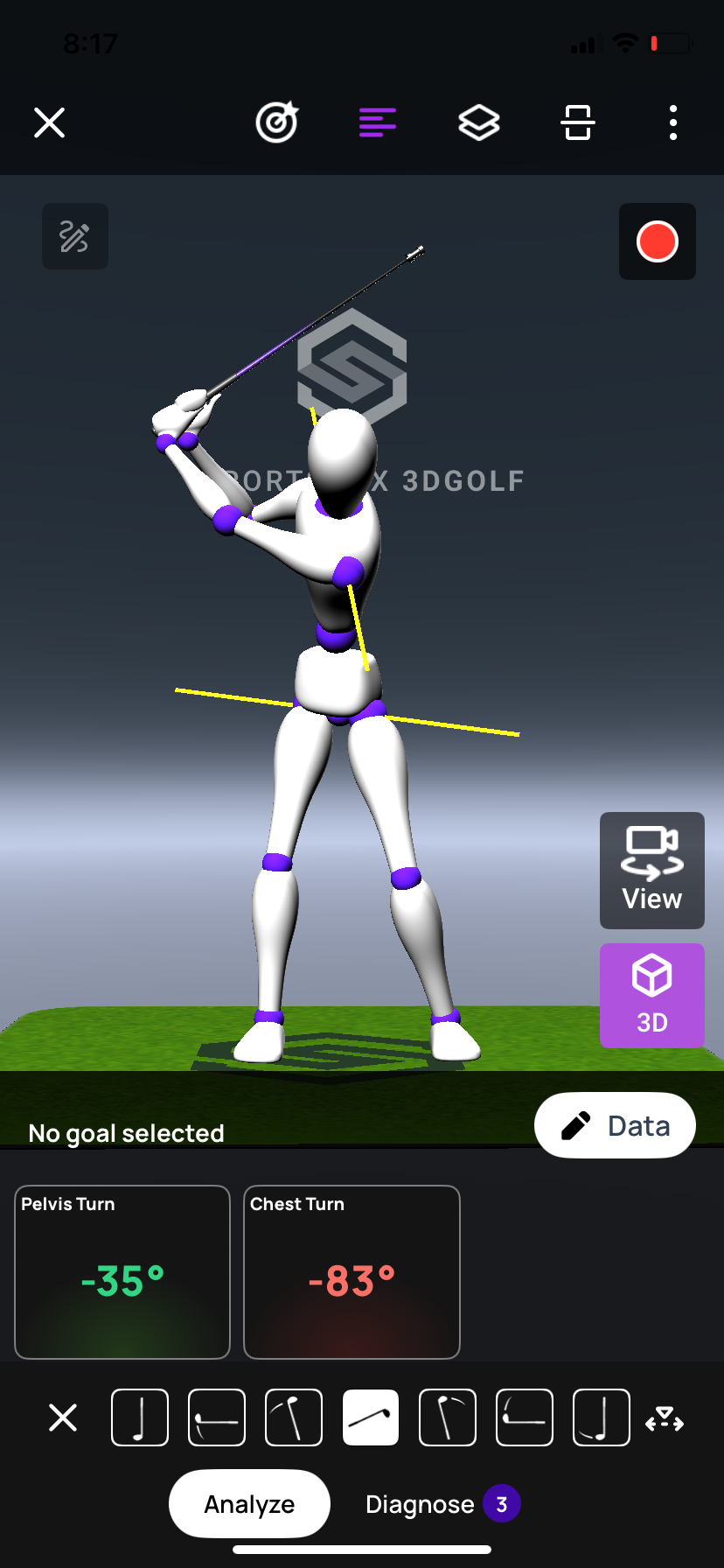
Chest Turn: Jumped to -83° (Huge increase).
Speed: Went from 77 mph to 84 mph.
Flight: The slice turned into a tight fade.
That’s a 7 mph gain just by fixing the rotation.
Not only did we see that increasing his rotation in the backswing lead to a faster club head speed, the added rotation also improved how he delivered the club. His club path improved by 3 degrees (went from -5 to -2 on average) which turned his slice into a tight fade. This is common when a golfer increases their backswing rotation, it tends to put the club on a shallower plane making it easier to deliver the club closer to neutral or even from he inside
Don’t Just Force It!
Before you go to the range and try to rip your shoulders back as far as you can, read this.
If you try to turn past your mobility limit, you will hurt your swing (and your back).
If you force rotation without the mobility to support it, three bad things happen:
You Stand Up: Your brain trades posture for "fake turn." You’ll thin it or fat it.
You Sway: You slide sideways instead of rotating. Power killer.
Reverse Spine Angle: You lean toward the target at the top. This is the #1 cause of lower back pain in golf.
How to Do It Safely
You have to earn the right to rotate. Here is the safe way to add speed:
1. Technical adjustment: Flare Your Toes Turn both feet out 20-30 degrees at setup. This instantly unlocks your hips and lets you turn deeper without swaying or hurting your back.
2. The Drill: "Open Book" Stretch
You need to loosen up that thoracic spine (upper back). Lay on your side, knees bent and on the ground. Open your top arm/chest like a book. 10 reps a day.
Video: Click Here
Give this one a try for an added bonus! Click Here
Want to check your numbers? Stop guessing. Come in, we’ll throw you on the 3D system, make sure you’re moving safely, and find the speed you’re missing.
Click Here to Schedule a Session